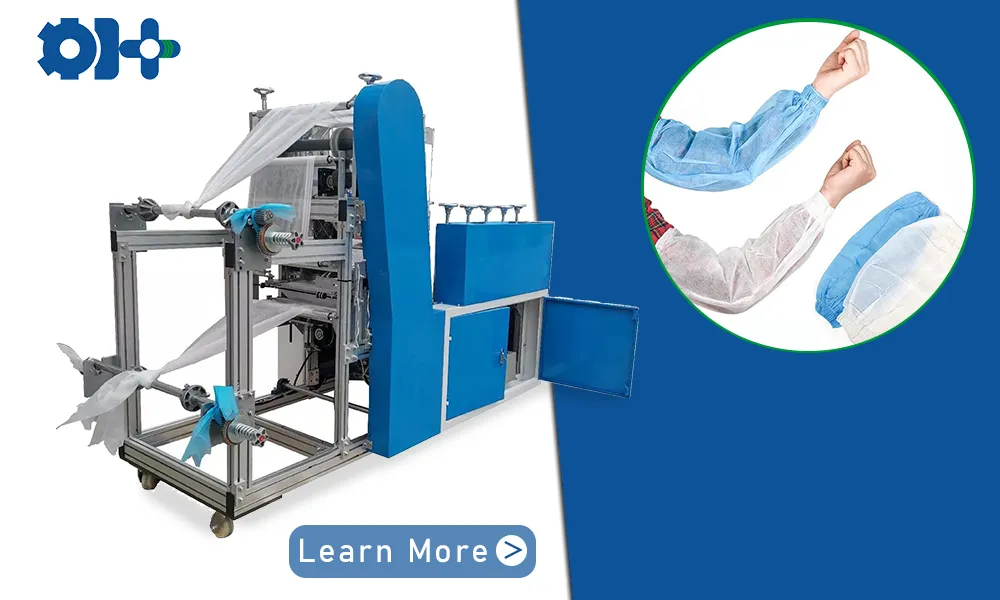
Manufacturers entering the medical disposable industry often ask the same question at the beginning: what does a surgical drape making machine actually do?
At first glance the answer seems simple. The machine produces surgical drapes.
But once you examine the real products used in hospitals, the manufacturing process involves several coordinated steps.
Understanding these steps is important for factories considering automated production.
A surgical drape making machine converts medical nonwoven fabric into finished surgical drapes by combining several processes in one production line. These typically include reinforcement attaching, fenestration hole punching, adhesive tape application, cutting, folding, and stacking.
How Surgical Drapes Are Produced in an Automated Line
Most disposable surgical drapes are produced from medical nonwoven materials, usually supplied in roll form.
Common materials include SMS nonwoven fabrics or laminated barrier fabrics used in disposable medical protective products.*
The production process begins with material unwinding. Fabric rolls are loaded onto the machine and fed forward under controlled tension.
From practical machine testing, stable material feeding is extremely important. If the tension is unstable, downstream processes such as hole punching or reinforcement placement can quickly lose accuracy.
For this reason, modern surgical drape machines usually include servo-controlled feeding systems to maintain smooth material movement.
Reinforcement Placement Protects the Surgical Area
Many surgical drapes contain reinforcement zones around the surgical opening.
These reinforcement layers provide additional absorption and strength during medical procedures.
In an automated production line, reinforcement materials are positioned onto the base fabric before the cutting stage. The machine aligns these reinforcement patches with the future surgical opening.
During machine testing, engineers typically monitor reinforcement alignment closely. Even small positioning differences may affect the final drape structure.
Because of this, reinforcement placement often relies on servo motion control or positioning sensors to keep the placement accurate.*
Fenestration Hole Punching Is Based on the Drape Design
One defining feature of surgical drapes is the fenestration opening.
This opening allows surgeons to access the surgical site while maintaining sterile coverage around the surrounding area.
Different procedures require different hole sizes and shapes. Some drapes use round openings, while others require oval shapes or multiple holes.
In practice, punching tools are usually designed according to the specific drape layout provided by the manufacturer.*
During machine trials, punching positions must remain synchronized with reinforcement placement and material feeding. When these processes are aligned correctly, the surgical opening appears exactly where it should on every drape.
Accurate Tape Positioning Requires Motion Control
Many surgical drapes also include adhesive tapes that help secure the drape during surgery.
Tape placement needs to remain consistent across the entire production run.
From our machine testing experience, achieving this consistency often depends on the adjustment of servo motion parameters. By tuning the movement of the tape feeding system and the main material transport system, the tape can be applied at a precise location while the material continues moving through the machine.
Once the motion parameters are optimized, tape positioning typically remains stable even during long production runs.
Cutting and Folding Prepare the Finished Product
After reinforcement, punching, and tape application are completed, the drape moves to the cutting and folding section.
The cutting system separates each drape according to the preset product length.
Next, the drapes enter the folding unit. Hospitals and surgical pack manufacturers usually require drapes to be folded consistently so they can be easily packed into sterile procedure kits.*
Automated folding mechanisms are designed to keep the edges aligned during the folding process. When properly adjusted, the finished drapes appear neatly folded and stacked, ready for packaging.
Automation Helps Reduce Human Handling
One of the major advantages of automated surgical drape production is the reduction of manual handling.
When reinforcement attaching, punching, taping, cutting, and folding are integrated into a single production line, the machine performs most of the work automatically.
In many factories, operators mainly supervise the machine, replace material rolls, and check product quality.
Reducing manual contact during production may also help improve consistency and reduce contamination risks in medical manufacturing environments.*
A surgical drape making machine is more than a single piece of equipment.
It is a complete production system that integrates several manufacturing steps into one coordinated workflow.
By combining reinforcement attaching, hole punching, tape application, cutting, and folding, automated machines allow manufacturers to produce surgical drapes more consistently and efficiently.
If you are evaluating surgical drape production or planning to expand an existing medical disposable product line, it may be helpful to review your drape design and production requirements first.
Different drape layouts often require different punching tools, reinforcement positioning, and folding configurations.
If you would like to evaluate whether an automated surgical drape machine could match your production plan, you can share your drape design or production requirements for further discussion.
Related Articles
If you are exploring surgical drape production, the following guides may also be helpful: