Bouffant caps are a relatively simple product, and the materials used are not complicated.
In most cases, a standard bouffant cap is made from:
- PP spunbond nonwoven fabric (8–20 GSM)
- elastic band or spandex
In some applications, PE film is also used.
So if you are just looking for a quick answer,
this is the typical material combination.
But once you go into production, the material choice still matters more than it first appears.
1. PP Spunbond Nonwoven Fabric (Main Material)
The main body of most bouffant caps is made from:
👉 PP spunbond nonwoven fabric
A common range is:
👉 8–20 GSM
This material is widely used because it is:
- lightweight
- breathable
- easy to process
- suitable for disposable products
For medical, hygiene, and cleanroom applications, this is the standard choice.
Different GSM levels mainly affect:
- softness
- strength
- material consumption
But overall, this range is already very common in production.
2. Elastic Band or Spandex (Edge Material)
For the edge of the cap, the material is usually:
👉 elastic band
👉 or spandex
Not both.
Elastic band is the more traditional option. It is widely used and generally easier to handle in production.
Spandex is also common. In some cases, it can even be lower in cost compared to elastic band, while the final wearing effect is quite similar.
So from the product side, the difference is often not very obvious.
From the production side, there is still a difference.
Spandex usually requires a bit more stable feeding and tension control, so the machine setup needs to match it properly.
3. PE Film (Used for Different Applications)
Besides nonwoven fabric, PE film is also used in bouffant cap production.
But it is not simply used less —
it is used for different types of products.
For example:
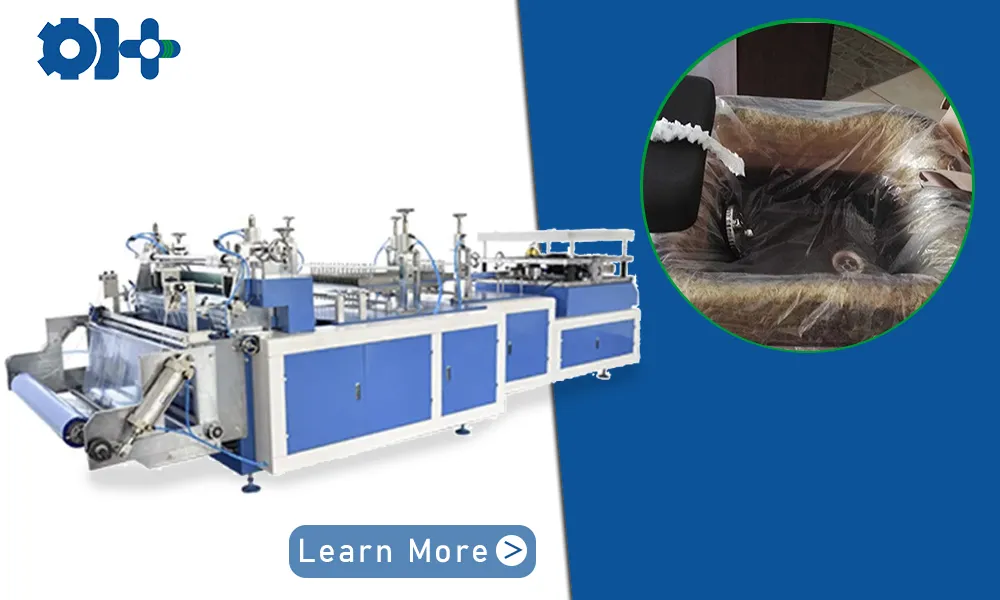
- shower caps
- waterproof protective caps
- certain industrial or hygiene applications
Compared with spunbond nonwoven, PE film is:
- waterproof
- not breathable
So the material is usually decided by the product application.
If the cap is used for medical or cleanroom environments,
nonwoven is normally preferred.
If the product needs waterproof performance,
PE film becomes the better option.
4. What Material Is Most Common?
For most standard disposable bouffant caps, the most common setup is still:
👉 PP spunbond nonwoven + elastic band (or spandex)
This combination gives a balance between:
- cost
- comfort
- breathability
- production stability
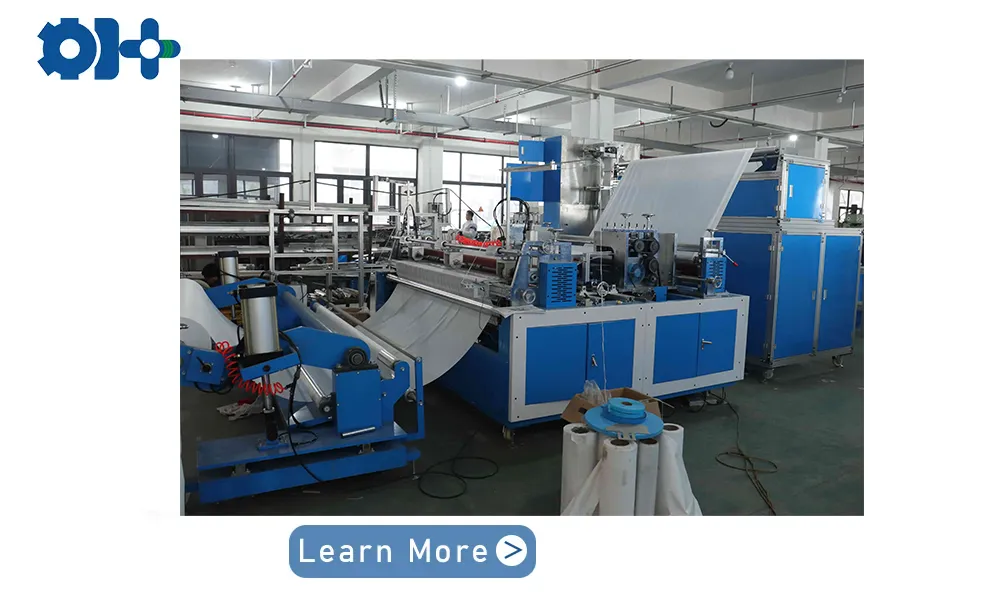
That is also why most bouffant cap machines are designed around this material setup.
5. Why Material Matters in Production
Although bouffant caps look simple, the material still affects several practical points:
- product feel and comfort
- material cost
- machine feeding behavior
- sealing quality
- production stability
For example:
A spunbond cap with elastic band is usually easier to run at stable speed.
If the material changes to PE film, or if spandex is used instead of elastic band,
the machine handling may need adjustment.
So material is not only about the product.
It is also about how smoothly the production runs.
6. A Simple Way to Look at It
If you are planning to produce bouffant caps, you can start by confirming:
- what material you want to use (nonwoven or PE)
- GSM range
- elastic band or spandex
- product type (medical, hygiene, shower cap, etc.)
Once these points are clear,
machine selection becomes much more straightforward.
Bouffant cap materials are not complex, but they should still be clearly defined at the beginning.
In most cases, the standard combination is:
👉 spunbond nonwoven + elastic or spandex
For waterproof or specific applications,
👉 PE film is also a practical choice.
The key is not which material is “better”,
but which one matches your product and market.
Need Help Matching Material with Machine?
If you already have a product idea, you can simply share:
- material type
- GSM
- elastic or spandex
- expected output
Based on that, we can suggest what kind of machine setup would be more suitable and stable for your production.
If you want to understand the next step in more detail, you can check: